Feb 5, 2015

Civil War II and the Coming Breakup of America

Can Americans Win a Guerrilla War Against the Banker Occupation Forces?  This is still an open question and the answer to the question should be rephrased to “Does America have the stomach fight a guerrilla war against the banker occupation forces?  The fact remains that the civil war has already begun”
civil war 2a
Benghazi is the one event that President Obama cannot make go away. This article will review the facts that demonstrate that the Benghazi affair was connected to an attempted military coup against Obama which subsequently failed. However, the motivation behind the coup did not die with Ambassador Stevens, it has only changed form and has now morphed into civil war mode. This is a two part series which examines why it is likely that the coming civil war will be a guerrilla war. Further, a convincing case will be made that the Benghazi incident will serve as the flash point for this emerging civil war. Also, the next part in this series will expose how the dead bankers and earthquakes in Connecticut factors into this crisis.

Four Types of Conflict

How can one be certain that the coming conflict will be a guerrilla war. Military strategists identify four levels of conflict; (1) nuclear war is the trump card of all conflicts; 2) conventional warfare; (3) guerrilla warfare; and, (4) terrorism.
Terrorism is the least preferred option by any insurgent group. With terrorism, there is absolutely no hope of final victory because territory is never occupied. For that reason, nobody aspires to engage in terrorism if they have a viable alternative and the American people do have a choice given how well armed we are.
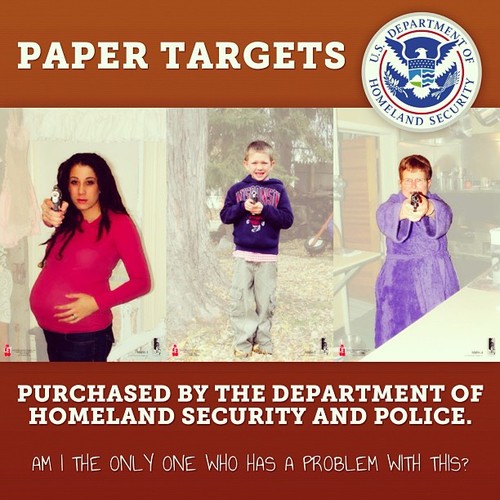
dhs-targetsWhile some of the 260+ command level officers fired by Obama are privately informing many of us in the media about the current state of affairs, they are not on the record.  Other than self-preservation, the major reason why these former military commanders are not on the record is because some of them are involved in planning a guerrilla war against the occupation forces commanded by this administration under the auspices of DHS. One of  my sources state that the coming civil war will be a guerrilla war and it will be prolonged. Another former General has told me that the American people do not have the stomach for guerrilla war and that majority of our people will lay down like sheep and be slaughtered.
Can Americans Win a Guerrilla War Against the Banker Occupation Forces?

Why the Coming Civil War Must Be a Guerrilla War

There are a total of 1,455,375 active personnel in the US military. The United States has over 200,000 troops stationed in 144 countries. These 200,000 men and women will not likely be a factor in the coming conflict and will prove to be in grave danger in the coming conflict.
I constantly have former military write to my website and proclaim their allegiance to the Constitution and pledge to destroy all enemies both foreign and domestic. I do not doubt their resolve or courage, however, there are not 30 million combat ready veterans, with the technological means and military organizational skills who would be ready to fight as they frequently claim. There are only 1.8 million veterans who are under the age of 35, which would be the prime fighting age for any resistance force. This means that in the best case scenario, that any resistance that the occupation forces could muster would consist of about 2.5 million men who have combat training in both our active duty personnel and our veterans. The mere size of the army that the Chinese could muster, in addition to the DHS, and the Russians, would dwarf any force that the American people could place on the battlefield.
The only choice that this country would have to resist the coming occupation and genocidal purge would be to make the war a guerrilla war.

The Sides Are Drawn

The coming civil war will consist of the present administration, the DHS, the Chinese, and the Russians versus some of the American military and about 10% American people.
Could a guerrilla war succeed? Is America equipped to fight a guerrilla war?

Can a Guerrilla War Succeed?

russia attacks america red dawnGuerrilla warfare, for most of human history, is not new. Tribal war, which traditionally pits one guerrilla force against another, is the oldest form of warfare. The new “conventional” form of warfare, which pits guerrillas against “conventional” forces, is more recent as it arose in Mesopotamia 5,000 years ago.
The good news for future American freedom fighters is that guerrilla war has been getting more successful since 1945, but unfortunately guerrilla fighters still lose most of the time. An analysis of past conflicts featuring guerrilla war, reveals that only 25% of guerrilla forces, out of 443 such conflicts since 1775, were successful. The government prevailed almost 64% of the time with the remainder of the conflicts ended in a stalemate. Conversely, since the end of WWII, the percentage of success for guerrilla forces has indeed gone up to 39.6%. Yet that still means that government forces have continued to prevail 51% of the time.
When the American people engage in a guerrilla war in the upcoming years, the people have less than a 40% chance of success.
Guerrilla wars are rarely short and as a result do not favor the American culture and psychological makeup because of our collective psyche of instant gratification. When Americans flip the switch on the wall, we expect the light to come on. Will Americans set aside their entitlements as well as their entrenched soft lifestyle and rise to the occasion? The answer to that question, is that it does not matter. America is in the early stages of a civil war, whether it realizes it or not.

When Will the Civil War Start?

History will someday show that Civil War II began with the Benghazi affair. In the fall of 2012, it is now clear that President Obama survived an attempted bloodless military coup. My sources accurately told me at the time, that Obama was fully aware of the fact that key elements of the military want him gone as the President. In response, Obama had secretly embedded his CIA operatives into various military command structures around the world by placing these operatives into executive command positions in order to help them prevent just such a military coup and these embedded forces have indeed served him well in the aftermath of Benghazi.
To the military commanders in the Middle East, they had full knowledge that Ambassador Stevens was running not only drugs, but guns and children, as well,  in order to financially support his regime overthrow apparatus. This strategy of arming terrorists to promote regime change in Libya worked quite well in overthrowing Muammar Gaddafi. Stevens was employing the same strategy in attempting to unseat Assad of Syria. 
The murder of Stevens and his security team at Benghazi is a seminal moment in American history. We have further learned that al-Qaeda forces, fighting on the side of NATO in Libya,obtained 20,000 hand-held stinger missiles. This means that the Obama administration has allowed al-Qaeda to be armed to the teeth including the acquisition of 20,000 stinger missiles in which only one is needed to take down an American airliner. The ties between murdered U.S. Ambassador Chris Stevens and jihadist Syrian rebels, now morphing into ISIS, are becoming more clear as it is now known that Chris Stevens was an arms dealer for the CIA. To cover their tracks, the Obama administration left Chris Stevens and his bodyguards defenseless as they were killed by the very terrorists that this administration armed. Can you imagine how the election of 2012 would’ve turned if the American public had this information prior to voting. This is why Stevens had to be killed, but there’s more. These events also explain why Hillary Clinton refused to honor Stevens’ request for more bodyguards. Is this why DHS director, Janet Napolitano abruptly resigned her post as well. Clinton certainly distanced herself from Obama by resigning as the head of the State Department.
The American people may have not been privy to the dynamics underlying the Benghazi affair, but the military leadership in the Middle East was keenly aware of the situation. With his nonsensical policies, his purge of the leadership of the American military and his disdain for the traditions of the military being forsaken by Obama, the military seized upon the first opportunity to unseat Obama.
If Stevens, knowing he was betrayed at Benghazi, had been rescued by American military forces, Obama and his administration would have been deposed.
As Stevens was begging for help after the attack had begun, General Ham had activated a special forces team within minutes of learning that the embassy, which was really a CIA safe house, that was under attack. When General Ham received his “stand down” orders from Obama, he still continued with his plans to go ahead with the rescue and was arrested within minutes of contravening the order by his second in command, CIA plant, Colonel Rodriquez. Admiral Gaouette, the commander of Carrier Strike Group Three, was preparing to provide intelligence and air cover for General Ham’s rescue in violation of his standing orders and he was promptly relieved of command for allegations of inappropriate leadership judgment.”  What is so significant about the sacking of these two military officers is that they were from two completely different command structures in two different branches of the military. This speaks clearly to an overall military mindset with regard to how they view Obama and their intent to remove him from office with Stevens being the key.
It is abundantly clear that had Obama been concerned for saving the lives of the four murdered Americans, American forces could have stopped the mortar fire that eventually killed Ambassador Stevens. However, Panetta and Obama blocked any rescue attempt. In legal parlance, Obama, Panetta and Clinton are, at minimum, accomplices to murder. At maximum these three rogue government officials are co-conspirators to first degree murder and now they have sacked two senior command military leaders to cover their complicity in an act of treason. I feel like I am watching an episode of the former popular television show, 24, as we are presently engaged in a plot that scarcely anyone would have believed if it had aired on television and not occurred in real life.
The positions held by Ham and Gaouette are so powerful and so sensitive, that their replacements require approval from the Senate. This fact is so significant that the two men were sacked at the same time in a potential war zone! And the military purge in this potential war zone was not limited to Ham and Gaoutte.
Within two months after the Benghazi attack, four senior U.S. military officers were purged by Obama:
  • Gen. Hamm, on October 18, 2012.
  • Adm. Gayouette, on October 18, 2012.
  • Gen. Petraeus, on November 9, 2012.
  • General Allen, on November 13, 2012.
The first sign of a major rift between the American military and Obama became evident when the supreme commander in Afghanistan, General Stanley McChrystal, was fired by Obama for derogatory comments made by the general about the President. Interestingly, the reporter who published the story which led to McChrystal’s firing was none other than murdered reporter Michael Hastings. I have always suspected that Hastings was murdered to cover up what he had discovered about Benghazi.
General Patraeus  (RET) was the former commander in Iraq and in Afghanistan after McChrystal was fired by Obama. He was rewarded when he was appointed to be the CIA director. An extramarital affair with Paula Broadwell brought down his reign as CIA director in November of 2012, just following the election.
There is the reason given to explain an event and there is the real reason behind the event. Sixty percent of all married men cheat on their spouses. The more money they make and the more power a man possesses, the more opportunity for cheating.
I have swamp land for sale, in Florida, for anyone to purchase if they are naive enough to believe that David Petraeus, former director of the Central Intelligence Agency (CIA), resigned solely based upon having an extramarital affair with the biographer-turned-mistress, Paula Broadwell. How did the affair compromise Petraeus’ position as CIA director? The FBI, who vetted Patraeus for the CIA director position, concluded the affair did not matter. What is behind this seemingly meaningless persecution of Petraeus? I can only conclude that Patraeus was also involved in the plot to bring Obama down and the affair was simplest way to bring him down.

From Coup to Civil War

Information is coming to light with regard to new military and paramilitary actions being directed against the Obama administration by disaffected military, black-ops, ex-military contractors and private mercenaries. This unholy alliance is presently acting out against the establishment. In short, dead bankers and earthquakes in Connecticut are interrelated and are much more significant than the American people are being led to believe. This is the topic of the next part of this series.

Feb 3, 2015

Food Rationing, Food Storage, and Wartime: We Have Much To Learn


I am a history geek. There is no one era in time that catches my fancy. All of them do. Lately, I have been studying food rationing during wartime during World War 1 and 2 in America and Britain. Some things have really caught my attention.

1. The government will step in and tell farmers what they can plant, where they can plant, and to do so in the most efficient way. The government will focus on the crops that will feed the most people cheaply. They will also be more concerned about feeding the troops than they will be about feeding the population. None of these things are bad things, but they are the reality.

2. People were very much encouraged to grow their own food. Gardens were almost expected. They were called "Victory Gardens". They were encouraged to grow food rather than lawns because the troops and the population needed food. They were also encouraged to can/preserve the food and share with their neighbors

3. People transitioned from meat based diets to plant based diets with a small amount of meat every day. If you didn't grow your own meat, meat was very heavily rationed by the end of each war. You may have been expected to make five pounds of meat last all week for a family of four.

4. People (town and country) were encouraged to keep chickens, rabbits, and other small livestock for eggs and meat. These things helped stretch the rationed food.

5. Along with food rationing, rubber, cloth, metal, petroleum, and a myriad of other things were rationed. You would have been expected to repair, mend, reuse, and repurpose anything you could to make it last longer. "Nothing wasted" would have been expected. In fact, you would have been looked down upon by your neighbors for being wasteful.

6. Sugar and fats were also heavily rationed. Most families were only given a quarter pound of fat and sugar each a week to make last all week by the end of the wars. That really is not much. Remember, fats are oils, butter, and lard.

7. If you had a dairy cow, you might be expected to give most of the milk to the government and only keep enough for your family to drink. If you had been able to make cheese and butter before, you wouldn't have been able to now because they needed the milk for the troops. If the milked soured for some reason, you could keep that for yourself.

8. Grocers often ran out of certain staple foods every week due to demand. Some things, like produce, may not be available at all and especially if it was grown in another country. Food from other countries might not be able to make it to America due to blockades and bombings. During the wars, boats were often repurposed for the armies to carry supplies.

9. Rationing got more and more stringent as each war wore on. At the start of rationing, you may be allowed one pound of sugar and by the end of rationing you may allowed a quarter pound of sugar.

Remember, before the WWII, we were in a depression in America. When the war broke out, most people were already used to having gardens, canning/preserving, raising livestock, and making everything stretch.

My grandma was born in 1920 and lived through the Depression and WWII. She remembers the Depression didn't hit them as hard because they lived on a farm in Northwest Iowa. They had dairy cows that had to be milked twice a day by hand, a garden, crops, and naturally reused everything. When she graduated high school, she worked as a hired girl to make extra money. She married my grandfather in 1942 and followed him from base to base as he trained pilots. They always made do with what they had and helped other families out. That was just the way it was.

Many people do not live this way anymore. It is just too easy to buy everything and throw it away when you no longer want it anymore. What would happen if rationing were to take place tomorrow?

Could you survive on what was allowed to you by the government? Could you handle stretching food over and over again just to have enough to eat all week? Could you handle cooking from scratch more to make food stretch that much further?

Many people relied on produce that was canned and preserved. They would seek out food that had been forgotten as being food. They would forage. They would hunt and trap. They started gardens if they didn't have one before. They raised chickens in the backyard. They produced more of their own food to make their food stretch farther.

Food storage was the key to their survival and to sending more food to feed the troops. Food storage is still key. You never know when a time like this will happen again. The situation might not be a war, but a personal crisis, a natural disaster, or a national crisis. Could you live like this?

What do you need to do so you and yours would not be affected as bad as others may be? Now is the time to store food, start a garden, raise a few chickens, learn to forage for food, hunt, and barter with neighbors. Now is the time to see how far you can stretch food and learn to live simply without having to rely on grocery stores as much.

You never know when this could happen to you. What can you do today?

Thanks for reading,
Erica


http://livinglifeinruraliowa.blogspot.com/2015/02/food-rationing-food-storage-and-wartime.html

Feb 2, 2015

30 LOST WAYS OF SURVIVAL FROM 1880 WE SHOULD ALL LEARN

The “SHTF” we all prep for is what folks 130+ years ago called “daily life:” No electrical power, no refrigerators, no Internet, no computers, no TV, no hyper-active law enforcement, no Safeway or Walmart, etc.
30 Lost Ways of Survival from 1880 We Should All Learn
They got it done, or else we wouldn’t be here!
People really should avert their gaze from the modern survival thinking for just a bit and also look at how the guys who wandered the west 130 or so years ago did it.
1.Community – We were not meant to survive in isolation forever. There are many skills we can learn from one another. Nothing will help people survive more than a tight knit community that cares for its members. In this community, you will find different skills, access to different resources, and a psychological morale improvement. Finding others with the same mindset will help you survive long-term, and make the situation far more bearable than braving the dark times alone.
Turns out the popular image of the Old West as a place where manly men solved their differences by shooting themselves in the face simply isn’t true. People were more likely to cooperate than fight – in a harsh and lawless world, it was better to side with your neighbor for mutual benefit than start shooting. One estimate places the number of bank robberies at about a dozen for the entire frontier period.
2.Many small towns in the Texas Hill Country have a secret. Beneath our town’s main street are old tunnels that were built to protect settlers in case of Indian raids. That makes me feel a little safer next time I shop for pickles knowing that if a nuclear bomb goes off my family can go underground. (quote – Sophie) Build or have in mind a hideout in your BOL or better said a hideout in your hideout.
3.“We don’t dial 911” – there won’t be any. Every type of gun known to man is here to protect their family and property. A good rule is to honk first when driving up unexpectedly to a ranch so as not to spook anyone.  Watching those old cowboy movies gave me a good idea: use both hands when shooting guns.
4.Shooting your dinner. Or shooting to protect yourself. Learn to hit something with a bullet and you’ll be better fed and it may even keep you and your family alive.
5.Repairing guns and reusing ammo. Limited or no ammo availability for my SHTF Guns meant the brass has to last as long as possible. Semi-auto rifles are harder on brass than bolt, falling block or other type’s rifles. With semi-autos, you have brass elongation; you need to trim your brass frequently, full-length size on every load. And after a few reloads, you basically run out of brass life (Read more about: SHTF Guns and Ammo)
A broken gunstock could be repaired with rawhide. The wet, pliable hide would be stretched over the broken pieces at the break, then either laced or nailed in place. As the rawhide dried it shrank, holding the broken stock together as effectively as if it had been replaced.
6.Stockpiling Wood and keeping warm was a chore in winter. About the only thing folks had to burn was wood. There was a woodpile or a woodshed associated with just about every house. There were no iron stoves in early Texas – they didn’t start coming in until late in the Republic period. Heat came from a fireplace, & it generally wasn’t very effective. Along the Rio Grande, especially in the poorer regions, there were no fireplaces in houses. That’s because Spain & later Mexico taxed chimneys. Those people cooked out-of-doors. Because they mostly built of adobe, their house – walls were very thick, so even a small fire indoors would keep the place fairly warm. In summer going into a properly – built adobe house is like walking into a cave. They stay fairly cool even on the hottest days.
7.Brain Tanning Leather – learning the process of skinning a deer, fleshing, stretching, drying, scraping, soaking, brain tanning, and then smoking the hide to waterproof. Deer hides, horse hides, coon hides – was used for just about everything, & rawhide was very useful. It used to be called ‘Mexican iron.’ The stuff is stiff as a plank, but if you put it in boiling water for a while, it becomes pliable. You can then use it in place of nails to tie a corral’s stringers to the posts. As it dried it would shrink, holding the stringers as effectively as nails.
8.Mostly, clothing was hand-made on the frontier. Almost any source of cloth could be used to make shirts or dresses. One of the reasons floursacks, for many years, were made of patterned cloth, was the fact that women collected them to make shirts or dresses, for themselves, their husbands, & their children. I can remember when I was a kid, farm ladies using white flour sacks to make children’s underwear.
9.Blacksmithing. Being able to make something useful like a horseshoe, tool, or cooking utensil from scrap metal could come in very handy. This is a skill people will barter for. Blacksmith work does require a good deal of practice and some special equipment, but it’s a skill worth learning and the learning curve is cut a bit if you already know how to weld or do other metal work.
10.Preserving food without a fridge. Many people have forgotten this old method of preserving food, especially meet. Here is one of the easiest methods available and doesn’t take much time.  You will need fresh pork, pickling salt, brown sugar, and crocks or jars for storage.
First, cut the pork into slabs. Generally, four- to six-inch slabs work best. Mix 1/2 pound of pickling salt with 1/4 cup of brown sugar. This is enough to cover twelve pounds of pork. Liberally cover the pork with this mixture. Next, pack the meat into sterilized crocks or jars. You should make sure it is tightly packed. Cover the meat with cheesecloth.
Using the temperature chart of your house, determine where to store your crocks. You need to keep the meat in an area that is about 36°F – no higher than 38°F. You also do not want an area that could see freezing temperatures. Leave the meat in this cool storage for at least one month. After that time, you can wrap the meat in plastic or moisture-proof paper and leave it stored all winter. You now have salt-cured pork for any occasion.
Many older people remember having a smokehouse on their land when they were young. Meat would be salted and hung to cure in these cool, dry areas. You could build a storage room for handing meat without too much work. The room should have excellent air circulation and stay cool without freezing.
Canned Meat – If you are familiar with canning fruits and vegetables, you should know that you can also can meat. You have to make sure you get the temperature of the meat high enough to kill bacteria before it seals. Chicken and beef are good options for canning, as are fish. You can cook the meat before you can and seal it. For example, you could make beef stew and preserve it in cans. Stewed chicken also cans and preserves well. Raw packing is another option you can try as well.
11.Navigation and Orientation – basic compass, map, landmarks; preparation for traveling outdoors; reading nature signs, stars, and sun to navigate through wilderness; knowing the best routes and time to travel.
Whether someone is going to bug in or bug out to somewhere safer, they need to know where they plan to take a stand and stay. Transportation is a very important issue to consider and how much of what they have can be moved to where they are planning to go. Fuel will be a huge consideration as the lack of it prohibits how far someone can go. Something else everyone should understand is how to read maps. You will likely not have any GPS system to guide you and the good old fashioned paper map may be the only way to show you where you are going. Understanding topographic maps is also key here
12.Trapping – trapping animals for clothing and food; using dead falls and snares; proper preparation of traps; understanding their use and safety.
13.Gardening. Growing your own vegetables and fruits, knowing soil conditions, how to get water to your plants, extending your harvest season, and common garden pests will be vital to having a continuous food supply. Check out The Forgotten Skills of Self-Sufficiency Used by the Mormon Pioneers for some great old-time gardening tips.
14.Saving seeds. The other end of gardening is being able to plant again next year. Saving seed can be kind of intimidating and mysterious, especially for plants like carrots that don’t go to seed in their first growing season. Start with non-hybrid seeds and a reference book like Seed to Seed and practice saving some kind of seed from your next garden. This is definitely a learned skill, but could be vital to a continued food supply.
15.Building a home, or another shelter, or a fort, or a fence. Knowing how to use hand tools and simple machines will go a long way if you have to rebuild.
16.Start a Fire without Matches and learn how to keep the fire going 24/7.Prepare your fireboard. Cut a groove in the fireboard. This will be your track for the spindle.
Rub! Take the tip of your spindle and place it in the groove of your fireboard. Start rubbing the tip of the spindle up and down the groove.
Start a fire. Have your tinder nest at the end of the fireboard, so that you’ll plow embers into as you’re rubbing. Once you catch one, blow the nest gently and get that fire going. (learn more methods)
17.Cooking over a fire. You may have other methods to cook your food available, like a solar oven or barbeque grill, but an open fire is the most primitive and one of the most common means of cooking in a grid down emergency.
18.Tracking – identifying animal tracks; understanding process of tracking. (tracking animals)
19.The Bee Hunter. One of the most important men on the frontier was the bee hunter. Sugar was almost impossible to come by. Honey, which was called ‘long sweetenin” in Texas, was the only source of sweetening for many years.
20.Knowing and preparing wild edibles. Which plants in your area are safe to eatand what parts of them are edible? A little foraging can add variety to your diet or even sustain life if there’s nothing else to eat.
21.Learn how to maintain light at night. One of the most depressing situations is to spend night in near to total darkness. Besides this, not being able to see at night is dangerous. Learning how to make candles and wicks should be a skill to consider learning. Fats and other oils will burn and can be obtained throughout nature and the outdoors. Long term solar battery rechargers for flashlights and LED battery powered lanterns are another option.
22.Maintain proper hygiene. This is one of the top priorities because disease andsickness can and do take down the toughest man. People must realize that after a terrible disaster it is not like someone that goes camping, comes back dirty, and takes a nice long shower or a hot bath. After SHTF the water to the faucets, as well the hot water heater, may not work. Bathing on at least a semi-regular basis is necessary to avoid all sorts of bacteria from building up on the skin and causing a variety of health concerning ailments that will then have to be treated. People should plan on just how they will keep themselves clean, even thinking about sponge baths as an option.
23.A car or a horse?
Some people say about SHTF that unless you’re living on an oil well or in a gas tank you won’t have access to gas.
Riding a horse. They make this look easy in the movies, but there is a learning curve involved. A horse is transportation, a pack animal, and a friend. Learning to ride one can get you places when roads are impassable or vehicles aren’t working. Plus, your gas reserves won’t last forever when SHTF.
Texans love all kinds of horse powered transportation. Should an EMP attackrender cars useless, they’ll get around riding their horses or driving their horse drawn carriages, buggy’s, hay wagons, chuck wagons and buck board wagons. During the summer on country roads you can run into wagon trains filled with hundreds of people driving their wagons, which is an awesome sight to behold! And yes they still ride their horses into town for a coke, hamburger and even a beer.
There were vast herds of wild horses in early Texas. The horses were considered anexcellent source of meat. Many of them were shot for food. Others were captured, but if a horse resisted being tamed and saddle-broke, it usually wound up on the table.
24. Herbal remedies. When the doctor’s not around, knowing which herbs to use and how to use them to treat common ailments like cough, fever, headache, etc. can be a great blessing to your family or others around that may need the help. (herbal remedies)
25.Learn first aid. Treating yourself and or others will probably be the only thing someone can do as medical professionals are going to be few and far between. Many places offer free classes on first aid because they want people in the community to be prepared. A good first aid book along with a first aid kit is something every household should have before, during, and after a disaster. Primitive conditions should be expected when anyone is helping someone after a catastrophe. A stockpile of antibiotics are always a good idea. Even acquiring the skill of making your own antibiotics can save lives as infection is something that will become an epidemic, especially with minor cuts and abrasives that are sure to be plenty.
26.Don’t throw away anything that may be useful at some point. Personally, I don’t like to keep too many things in my house. So I throw away much stuff. And most of us do that because we know that if we have to, we can immediately buy another one. But our grandparents NEVER threw away jars, plastic bags, casseroles, boxes, cans, metal in general.
27.Stealth. While the survivalist mindset might seem to stem from weathering bad times, it is actually based in a basic enjoyment of nature. Nature is a gift, and the ability to live comfortably from its provisions is one of the most life-changing experiences a person can ever have. The art of survival seems to have been lost over the years, but before the technology boom in the last century, it was commonplace to know and understand survivalist principles.
One of the most basic skills when in the wild is a combination of two methods. These methods are called the “Fox Walk” and “Wide-Angle Vision.” These were the basic “bread and butter” of how tribal populations would hunt and stalk without leaving any trace. Learning lessons from these peoples, it has enlightened us on how to live from the land. (Native American Survival skills)
28.How to pan for gold – Although gold pans were much in evidence during the early days of the Gold Rush, miners used them less and less as time went on and they created better gold extraction devices but much more expensive. Even today, however, some gold seekers will use the light and simple pans for prospecting, systematically sampling gravels as they work up a stream, for example, and knowing that when the gold “color” stops, a vein or two of gold feeding into the stream may be close at hand.
29.Understand the psychology of desperate people. This is a difficult one. After a SHTF event people are going to, simply put, go crazy. That neighbor that was in control during many minor emergencies may be the one pounding on your door with whacked out eyes demanding what you have because they did not prepare for anything. In the Wild West most of the travelers when they spotted another traveler – they went around him thinking it’s wiser not to encounter at all.
30.Every cowboy knows that a rope is an important tool. Sure they can lasso a cow, but it serves so many other uses that it would be impossible to list. Suffice to say that that’s one thing that you never can have enough of and I’ve been known to use my son’s lariat in a pinch to tie down furniture on the utility trailer.
Source: Ask a Prepper

Expired, or Not Expired… Can You Store Medications Long Term?

What medications* do we keep in our preps? We store: 1) over-the-counter (OTC) drugs: ibuprofen (Motrin), acetaminophen (Tylenol), aspirin, diphenhydramine (Benadryl), pseudoephedrine (Sudafed), loratadine (Claritin), guaifenesin (Mucinex), and 2) antibiotics (that I recently posted about): amoxicillin, cephalexin, ciprofloxacin, doxycycline, metronidazole.
How long can they be stored? They have expiration dates, does that mean they go bad?
Let’s start with what do drug expiration dates mean? Required since 1979, the expiration date is the last date that the pharmaceutical company will guarantee 100% potency (some sources state at least 90% potency). So then we ask, how long does it take a drug to lose it’s beneficial effects?
That is the question that the Department of Defense (DOD) asked the Food and Drug Administration (FDA) in 1985 (the military had over a billion dollars worth of medication stored). So in response, in 1986, the DOD and the FDA began the Shelf Life Extension Program (SLEP).
The SLEP program is documented in the Wall Street Journal article, Many Medicines Are Potent Years Past Expiration Dates, by Laurie P. Cohen, March 28, 2000. The military submitted, and the FDA has evaluated, over 100 drugs – prescription and OTC. The results showed that about 90% of them were safe and effective well past their expiration dates, some for 10 years or longer. Joel Davis, a former FDA expiration-date compliance chief, said that with a handful of exceptions – notably nitroglycerin, insulin and some liquid antibiotics – most expired drugs are probably effective.
In light of these results, a former [FDA] director of the testing program, Francis Flaherty, says he has concluded that expiration dates put on by manufacturers typically have no bearing on whether a drug is usable for longer.
Mr. Flaherty notes that a drug maker is required to prove only that a drug is still good on whatever expiration date the company chooses to set. The expiration date doesn’t mean, or even suggest, that the drug will stop being effective after that, nor that it will become harmful.
“Manufacturers put expiration dates on for marketing, rather than scientific, reasons,” said Mr. Flaherty, a pharmacist at the FDA until his retirement in 1999. “It’s not profitable for them to have products on a shelf for 10 years. They want turnover.”
The Harvard Medical School Family Health Guide, in Drug Expiration Dates – Do They Mean Anything?, notes that, with rare exceptions, “it’s true the effectiveness of a drug may decrease over time, but much of the original potency still remains even a decade after the expiration date”.
Where and how medications are stored is an important factor in minimizing their degradation. Storing in a cool, dry, dark place will maximize their lifespan; when possible keep sealed in their original container until ready to use. Medications stored in bathroom cabinets or shelves could have effectiveness significantly reduced. Be sure to discard any pills that become discolored, turn powdery, or smell overly strong; any liquids that appear cloudy or filmy; or any tubes of cream that are hardened or cracked.
Dr. Bones, from The Doom and Bloom Show, states in his blog post, The Truth About Expiration Dates, “I put forth to you this recommendation: Do not throw away medications that are in pill or capsule form after their expiration dates if you are stockpiling for a collapse. Even if a small amount of potency is lost after time, they will be of use when we no longer have the ability to mass-produce these medicines. I’m aware that this is against the conventional medical wisdom, but we may find ourselves in a situation one day where something is better than nothing.”
(Friday: What I Did This Week To Prep)
* The terms medications and drugs (referring to legal drugs) are used interchangeably.
Post Script: Dealing With The ‘Tetracycline Becomes Toxic’ Myth
There has long been a belief that the antibiotic tetracycline becomes toxic once it has past it’s expiration date.
In Medscape Today’s article, Do Medications Really Expire?, they discusses the original case, “A contested example of a rare exception [of expired drugs possibly becoming toxic] is a case of renal tubular damage purportedly caused by expired tetracycline (reported by G. W. Frimpter and colleagues in JAMA, 1963;184:111). This outcome (disputed by other scientists) was supposedly caused by a chemical transformation of the active ingredient.”
The case was thoroughly evaluated in the 1978 article, Tetracycline in a Renal Insufficiency: Resolution of a Therapeutic Dilemma, it states, “”Old” and degraded tetracyclines have previously been demonstrated to have direct toxic effects on the renal proximal tubule, but because of changes in manufacturing techniques this is no longer a real problem.” It also states, “It has often been stated that the tetracyclines should be avoided in patients with severe renal disease, but, as we shall see, doxycycline represents an important exception to the rule”.
In Cohen’s article on the Shelf Life Extension Program, Many Medicines Are Potent Years Past Expiration Dates, it goes on to state, “Only one report known to the medical community linked an old drug to human toxicity. A 1963 Journal of the American Medical Association article said degraded tetracycline caused kidney damage. Even this study, though, has been challenged by other scientists. Mr. Flaherty says the Shelf Life program encountered no toxicity with tetracycline”.
Dr. Bones and Nurse Amy, from The Doom and Bloom Show, when interviewed on TSP, clearly state that tetracycline past it’s expiration date is safe (episode 736, beginning at 43:45). Nurse Amy concludes the topic with “. . . if they can just get that in their heads that tetracycline isn’t going to kill you when it’s past expiration”.
Medical evidence supports that tetracycline, past it’s expiration date–especially in the form of doxycycline–is as safe as any other expired antibiotic.